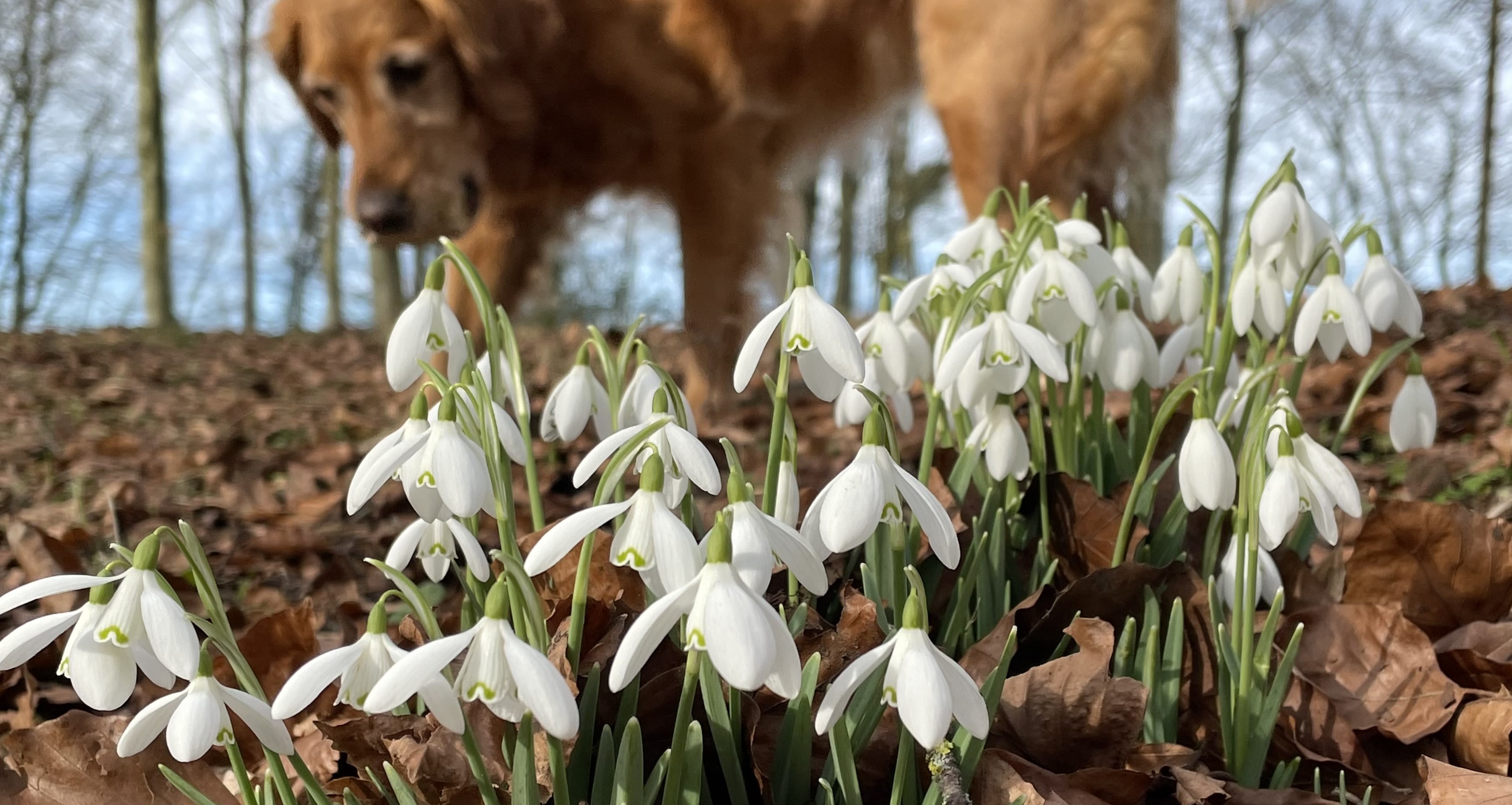
We will never have a perfect sense of what needs to happen next. We are always feeling in the dark. We do not have to become somebody else – the more authentic and grounded our hope is, the more true and helpful it is. Breanna West.
The week before half term I watched part of a stunning lesson in an EYFS classroom. “I want you to think about what it must be like being an astronaut, and what they miss about home.”
This provoked a fabulous discussion, skilfully led by the teacher and with some sparkling moments, and of course a few laughs (spacesuit toilet humour is essential in Early Years). I stayed for much longer than I’d expected, and I left the room with a sense of joy and reverence for the teacher’s skill and humanity. I remember thinking that although this was only one lesson, only one relatively small point in time, it was a brilliant moment. A moment in time which encouraged children to really think hard, to listen really carefully to each other. A moment of hope which left me spellbound.
Our children’s educational lives are simply an accumulation of moments. Moments like these help me to feel so full of hope, because of what is going on in so many classrooms around the country. They make me more hopeful for the next generation.
Yet when I sat with the headteacher later that afternoon, she told me about the challenges of attendance, behaviour, high level SEN needs, child poverty, a lack of funding and a tricky recruitment landscape. Persistent problems knocking at her door. What I saw was an excellent school leader, supporting her team in the face of significant challenges. She was full of determination, she wasn’t going to let anything get in her way of her making things better for her staff and children. But to deny the challenges would have been insulting. She was trying to run her school with one hand tied behind her back. Yet still I could see she was managing to pull rabbits from hats where rabbits had no right to be.
She was bringing hope in the dark.
Despair is often a generalised feeling of gloom. To hope is to act specifically.
People who bring hope understand the reality of the situation. They are not unaware of the difficulties – the brutal facts – but they have a plan. Maybe they’ve given up waiting for external solutions to appear. Maybe they sense that the only answers will come from their own team or from colleagues down the road, battling the same issues and creating home-made solutions.
If you focus on the system making the job harder than it should be, then there are plenty of reasons to lose hope. If you focus on the people delivering in spite of it, then there are many reasons to keep on hoping.
I can feel hopeless because the state will not admit that endemic poverty has changed the context in which we work; yet I’m hopeful because of the resourcefulness of school leaders to find radical solutions when the government fails them.
I can feel hopeless about the way Ofsted have made school leaders feel; yet I’m hopeful that there is now momentum in the system so we will no longer stand by as leaders walk away from schools.
This post is about what we might do to bring just a little hope into our worlds. It’s about hope in the dark.
1/ Understand what hope isn’t
Firstly, it’s important to say what hope is not. It is not the belief that everything was, is or will be fine. Real hope deals in actual, real possibilities, which means that we’ll have to get our hands dirty. It is not a sunshiny everything-is-getting-better narrative. There’s a difference between hope and optimism. Hope is also more than an elusive longing for something good to happen. It is the catalyst for action.
2/ Hope is action
The world is complex. Yet to work in schools is to live so that one’s life is closely bound up with others. It is to live a life of responsibility, to have skin in the game. “Betterment,” says Atul Gawande, “is a perpetual labour.”
Hope means to be diligent – see the detail and the small change that I and only I can make. To focus on the very next person, on the person now in front of me. Start small – it is enough.
Hope means we puzzle over difficult questions – like: How much should teachers be paid? How should we support high needs children? What do we do about parents who don’t send their children to school? How can we share more and compete less in the world of children?
Hope means trying to do the right thing – against the temptations of self-interest or keeping people happy or not rocking the boat. This might mean giving feedback more honestly, or saying thank you better because this disciplines me to build hope in others.
Chan Hellman has become an authority in research on hope. His transformational work has been adopted by US non-profit organisations and public sector agencies. HOPE International and associated Family Justice Centres serve more than 150,000 children and adult survivors of domestic violence, sexual assault, child abuse and human trafficking each year. Hellman’s research is used to support survivors find pathways to a more hopeful future.
“Hope is not a wish,” Hellman says. “Hope is about taking action to achieve goals. Wish is having a goal that we desire, but no strategies to achieve it. The science of hope shows there are ways that someone who has experienced trauma can persist and thrive. and we’ve witnessed hope and resilience helping students overcome major trauma. Hope is identifying how to get there from here, and how to motivate people to do that work. That’s the essence of hope.”
3/ How change happens
There are major movements that failed to achieve their goals, there are also comparatively small gestures that mushroomed into successful revolutions. “After rain,” says Rebecca Solnit, “mushrooms appear on the surface of the Earth, as though from nowhere. What we call mushrooms, mycologists call the fruit in the body of the larger, less visible fungus.” We often consider uprisings and revolutions to be spontaneous, but less visible, longer-term underground work has often laid the foundation.
When we watch the news, it seems that change happens in sudden bursts. But the reality that we know is different. The struggle to get women the vote took nearly 75 years. Things that appear to happen suddenly, usually appear out of long-dormant seeds. Someone has to have planted those seeds, and someone needs to tend them to grow. And in schools – consistently good teaching, well-managed budgets, trusted HR processes, effective meetings, long-term school improvement – these elements of reliable and positive change don’t just happen. It’s like the iceberg metaphor – most of the work is unseen, with ingredients out of sight.
Hope mushrooms up.
“I’ve seen enough change in my lifetime to know that despair is not only self-defeating, it’s unrealistic.” Susan Griffin
4/ Start living that way now
Research shows that hope can positively impact mental health and strongly predicts overall well-being. Together we are powerful, and retelling stories of victories might just give us confidence that we can change our small part of the world.
“Suppose you had the revolution you were dreaming about, suppose your side has won, and you finally have the kind of society you wanted. How would you live in that society? Why not start living that way now?” Paul Goodman
We all need a sense of purpose, the why behind what we do. Effective leaders connect the background vision with the daily practice. It means joining the dots from saying why we are doing this, to the exactly what needs to be done, and how we will do it. It creates hope.
Some of the leaders in education who inspire me most are leading Professional Development. Behind all the strategy, what they are actually doing is planning possible futures, describing destinations, sowing hope.
5/ The ‘good of not knowing’
Hope, like faith, sparks or dies during periods of uncertainty. When my son was stuck at home instead of at university during the Covid period and unable to be in a lab, he could easily have become uncertain about the future. But in fact, the uncertainty period was a unique opportunity for growth. If he were able to move forwards with confidence, a strength would be formed there that would never have been there if he found the answers right away. This is the ‘good of not knowing’. When we don’t know what the future looks like, that uncertainty can be the very space for hope to grow. We’re so easily downhearted when things go wrong. “A disappointment,” says Ken Costa, “is not a destiny cancelled.”
6/ Courage and hope
In The Power of Habit, Charles Duhigg shows us how:
Our choices become our habits,
Our habits become our character, (and, as Heraclius said)
Our character becomes our destiny.
So, when I’m more fearful, each time I choose to step back from giving my time, or offering help, or being kind, I become less and less the kind of person who’s good to be around, and I lose the confidence to step forward and bring hope into situations.
Yet when I show more courage, when I’m more positive about the situation in front of me – when I decide to speak well of colleagues not present, when I praise them, when I offer help and give my time, then I become a more positive colleague with whom to work.
“The very least you can do in your life is figure out what you hope for. And the most you can do is live inside that hope. Not admire it from a distance but live right in it, under its roof.” Barbara Kingsolver
7/Hope and memory
The status quo wants you to believe it’s inevitable. But when I think back to the football crowd violence, the casual racism, the homophobia of my youth; and then I look at the solidarity of young people today, I’m amazed at the progress. Amnesia leads to despair in many ways; and when you forget how much things have changed, you don’t see the potential for future change.
“Memory produces hope in the same way that amnesia produces despair.” Walter Brueggeman
Although hope is about the future, the grounds for hope lie in what we remember of the past. There are three possible stories we could tell, says Rowan Williams. The first is of a past that was nothing but negativity and injustice; the second is of a past that was of some golden age; but the third story is a more honest one, it has room for the best, and the worst, for grief and jubilation.
8/Hopeful feedback – find someone who believes in you
Tell people what they do well, and then find someone to do the same for you.
Thinking deeply about our colleagues strengths and telling them is a gift. Yet so many talented leaders often cannot say what they’re good at. This self- knowledge builds hope, because only when we know the unique skills and strengths we bring can we build up those around us. And because we cannot see this ourselves, we require a listener who is not too close, who listens without judgement, who brings no baggage, and who asks questions which get to the truth. The primary purpose of coach or mentor is to instil hopefulness. A coach believes in the ability of the person in front of them to make positive change. The best people bring hope when it’s scarce.
“The way you see people is the way you treat them, and the way you treat them is what they become.” Johann Wolfgang von Goethe.
Find someone who believes in you to change. Then believe in someone else to change.
9/ Dealing with negativity and fears
There is nothing more sapping at work than negative people. You bring joy and hope for your colleagues when you deal well with negativity. Just managing it helps, transforming it is glorious! And we’ve all sat in meetings we just want to leave. Leading a meeting with energy and positivity brings hope and oxygen for colleagues, and means we look forward to the next one with some confidence.
Sometimes I think people come across as negative, not because they are inherently like that, but because they’re afraid of the disappointment from the possibility of failed hope. Fear can kill hope and breed negativity.
Our schools and our society needs courage like never before.
In David and Goliath, Malcolm Gladwell describes the courage of the underdog, saying that underdogs are not necessarily weak, because they have ‘the advantages of disadvantages.’ People often ask, when faced with a Goliath-sized challenge, ‘should I persevere or should I give up?’ But we forget that giants are less impregnable than we think. The fact of being an underdog and drawing upon courage can change people in powerful ways. It can make possible what might otherwise have seemed unthinkable.
10/ Just enough light
We’re sometimes stuck, just because we cannot see the perfect way out of the problem. It’s a little like unfolding and opening up an Ordnance Survey map completely, only to find that there are lots of white spaces where there should be mud-brown contours or bright-green woods. When this imperfect map is all you have to guide you, then you still have to make a start, even though you can only see the first few steps in front of you.
Headlamps only light up the fifty yards immediately ahead of you, but that is normally all you need to make the longest journey. You don’t need to see all the way, you just need to keep peering through the murky windscreen, watching as the road winds so you can avoid the deep winter potholes as they appear. Holding onto hope can be a little like this.
We just need enough light for the next step of the journey.
 ianfrosteducation